The 2019 indie visual novel Eliza is set in a world where therapy has been automated. Four years later in our own world, apps are doing exactly that with AI.
Quest 3 will feature stereo color cameras for the first time in a Meta headset. The passthrough quality seen in Zuckerberg's video looks noticeably superior to Quest Pro's, lacking the "warping" distortion and graininess seen in Meta's now-$1000 headset.
One portion of the video appears to show environment relighting, a feature already present in mobile AR platforms like Apple's ARKit, Google's ARCore, and Snapchat's Lens Studio. This involves changing the colors and lightness of the real portions of the scene to match a virtual light source, in this case a window to a virtual aquarium anchored to the wall. It's an example of a feature passthrough headsets can pull off convincingly because of their full control of pixels while transparent AR glasses can't because of their limited field of view.
0:00
/
Another part of the video shows how these wall-anchored portals to virtual worlds can be used to extend the environment for mixed reality gaming, with a zombie enemy climbing through a virtual window to the room.
Yet another part shows how miniature games can be anchored to your desk for other surfaces for seated mixed reality content.
In the final section of the video Zuckerberg joins Meta's CTO Andrew Bosworth to play two colocated mixed reality games, meaning they see the same virtual objects at the same locations in the room, including ones they're holding. This can be achieved today with the Shared Spatial Anchors API Meta released in December.
The first colocation game shown sees Zuckerberg and Bosworth compete in a sword fighting game standing facing each other, while the other shows a more relaxed scenario of sitting beside each other remotely controlling virtual miniature tanks on the floor.
0:00
/
Meta still hasn't gone into detail about how exactly Quest 3's environmental awareness works. For mixed reality to interact with your walls today on Quest 2 and Quest Pro you have to arduously manually mark them out, but Meta confirmed Quest 3 has a depth sensor and claims it's capable of "intelligently understanding and responding to objects in your physical space."
Full details of Quest 3's mixed reality technology will likely be revealed at Connect 2023 on September 27.
Meta tested asset importing to overhaul Horizon Worlds graphics with a new shooter world called Titanborne.
The company described Titanborne as a "sneak peak at new features, improvements and creator tools currently in development", confirmed to be the model and texture importing features announced at Connect 2022 in October.
0:00
/
Currently Horizon Worlds creators build virtual worlds entirely inside VR, using the controllers to place and manipulate primitive shapes then using a spatial visual scripting system to add dynamic functionality. But this results in a crude simplistic graphics style that has faced widespread ridicule when seen in screenshots outside VR.
The ability to import models & textures should enable worlds with significantly improved graphics quality. “We started with simple graphics, and we’re doing a ton of work to meaningfully improve how Horizon will look and feel over the next year – the metaverse needs to feel inspiring”, Meta’s CTO Andrew Bosworth said in October.
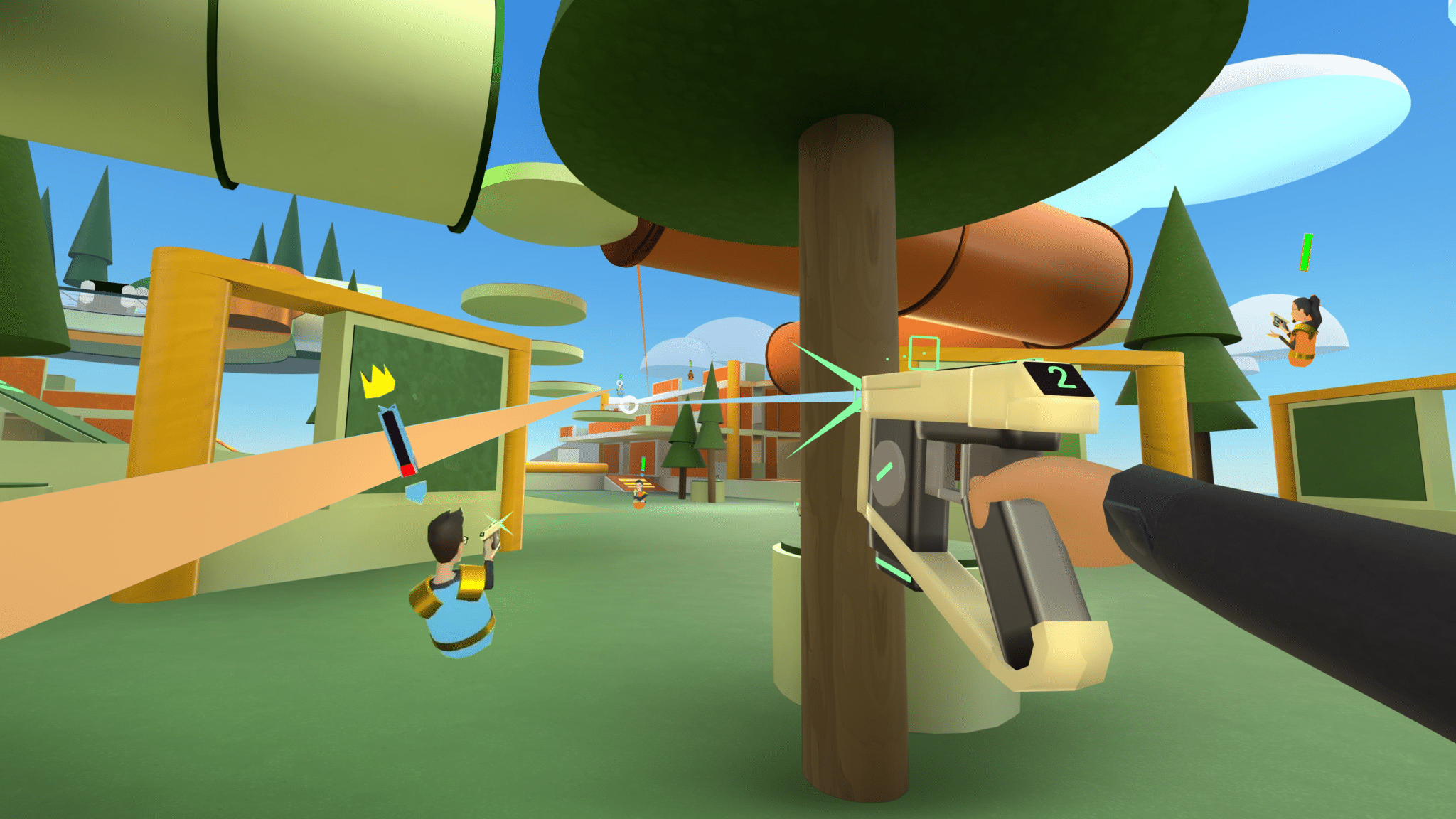
A shooter built in Horizon's existing tools (left) compared to Titanborne (right)
Alongside the announcement of asset importing, Meta also said Horizon Worlds will get support for TypeScript, a popular programming language based on JavaScript, mostly used on the web, for “more dynamic and interactive worlds.” There's no indication Titanborne uses TypeScript, however.
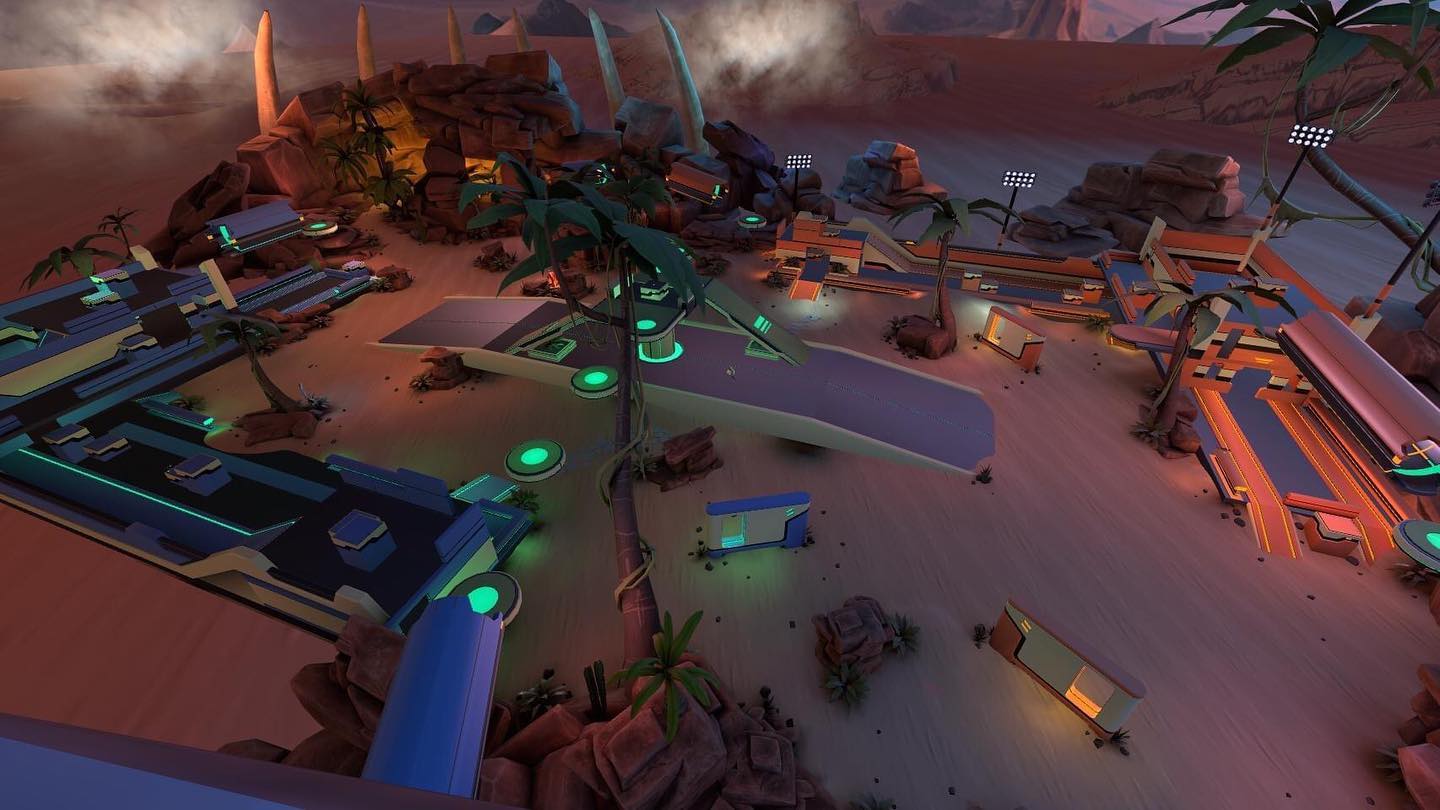
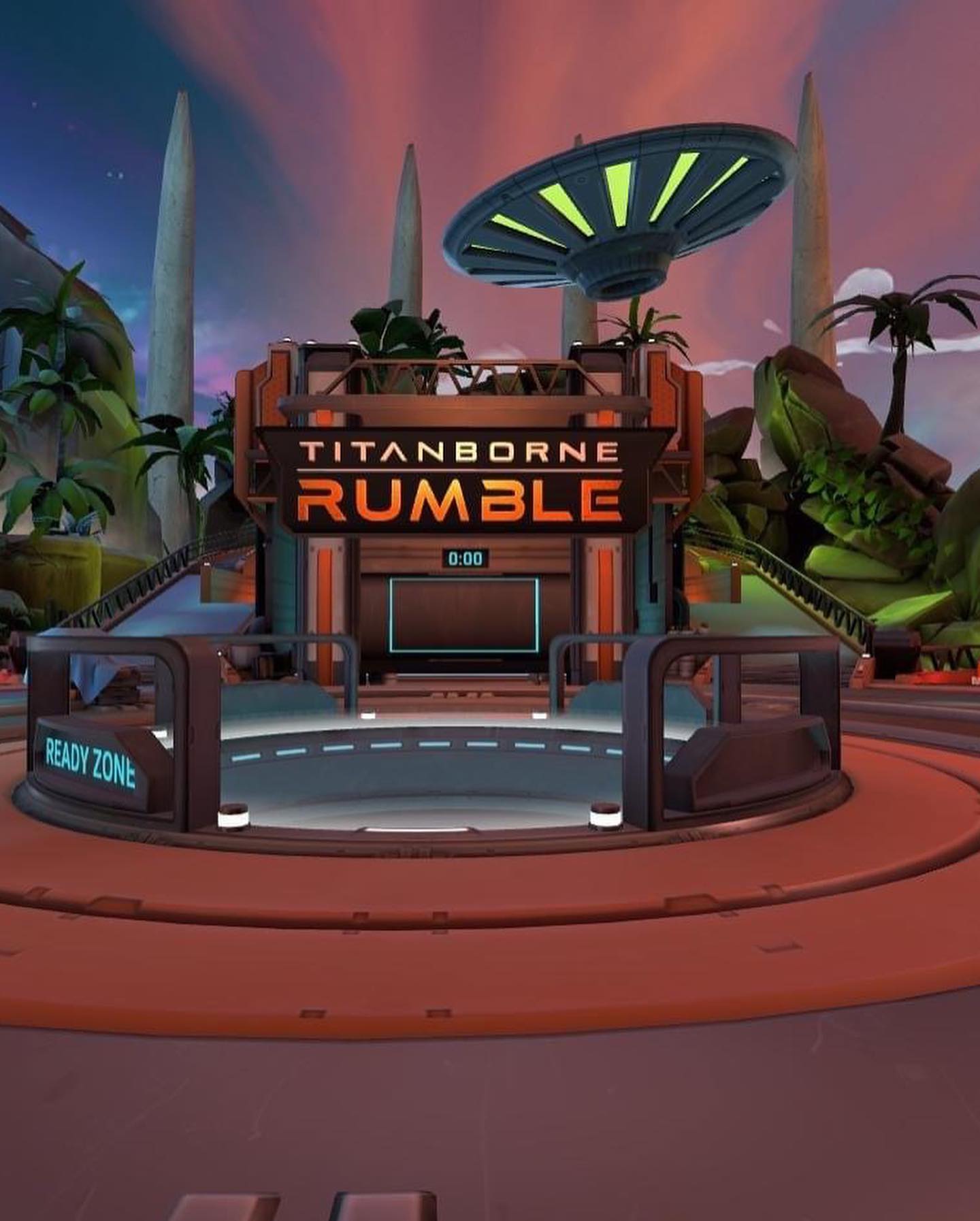
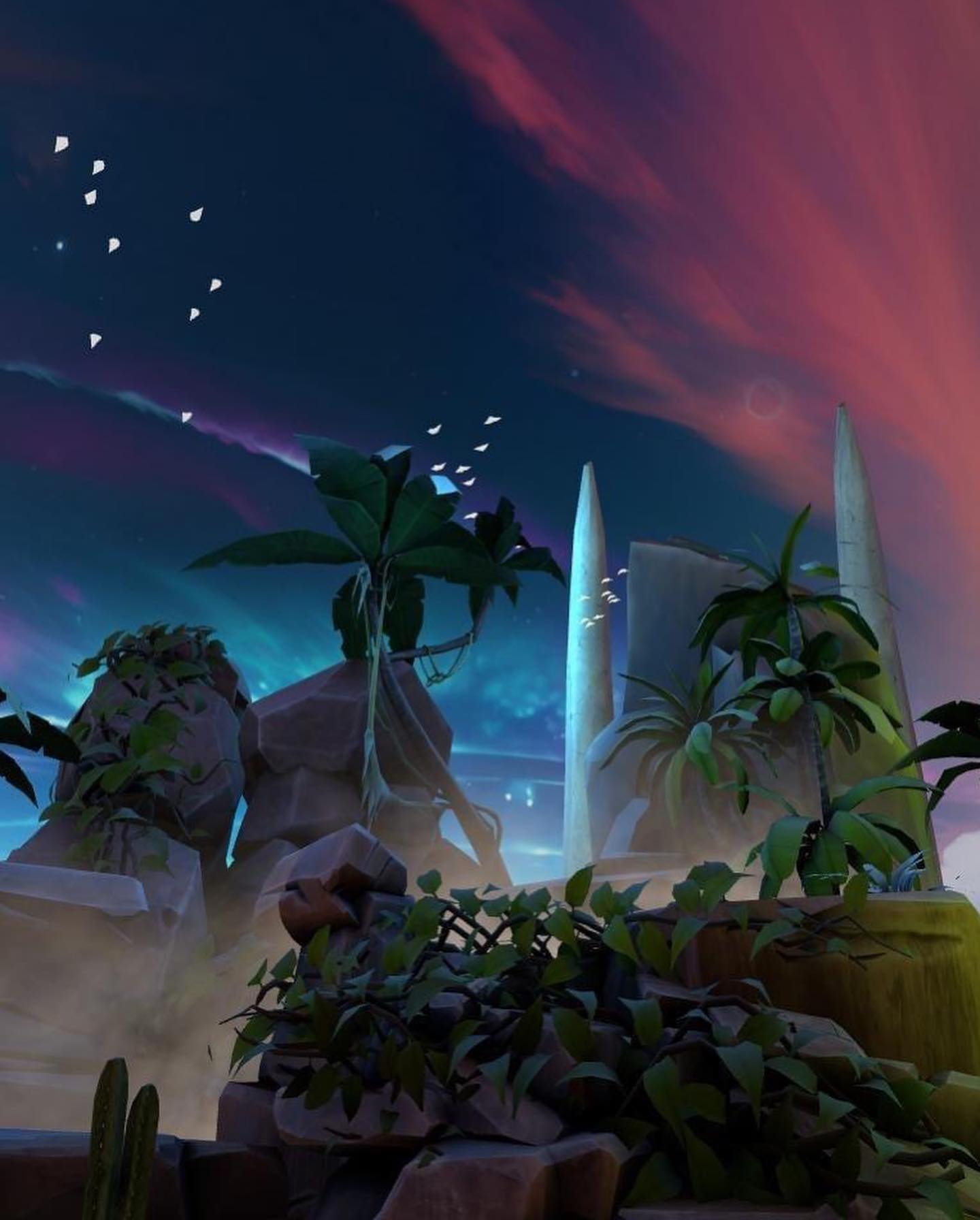
Titanborne screenshots from user 'A Bit Of LucK'
A leaked internal Meta memo last year revealed that the executive in charge of Horizon Worlds believed it "has not found product market fit". Its competitors Rec Room and VRChat are almost always in the top 5 most popular Quest apps, while Horizon Worlds only makes the top 25.
Overhauling Horizon's graphics could be the key step needed to increase the appeal of the platform and expand the kinds of worlds possible to build in it. Meta also plans to add legs to the avatars and eventually overhaul their graphics too.
There's no word yet on when the features used for Titanborne will be available to other Horizon Worlds creators.
A developer walkthrough of Asgard's Wrath 2 from yesterday's Meta Quest Gaming Showcase gave us an in-depth look at Sazaru Games' upcoming sequel.
Meta revealed Asgard's Wrath 2 yesterday, its big AAA bet on Quest that promises "60 hours of exploration" when it launches later this year.
The walkthrough (which is age-restricted, meaning we can't embed it – you'll have to watch it here on YouTube) explains that Asgard's Wrath 2 "picks up where the first game left off, in a mysterious taven you can't escape from." However, you'll soon find yourself in an encounter with the weavers of fate, who set you on your way to find and stop Loki.
While Asgard's Wrath 2 is a sequel to the 2019 release, we learned yesterday that there will be an optional "dream-like sequence" to catch player's up on the story. After that, you'll be off to explore some massive new worlds in the realm of Asgard and beyond.
Expansive New Worlds
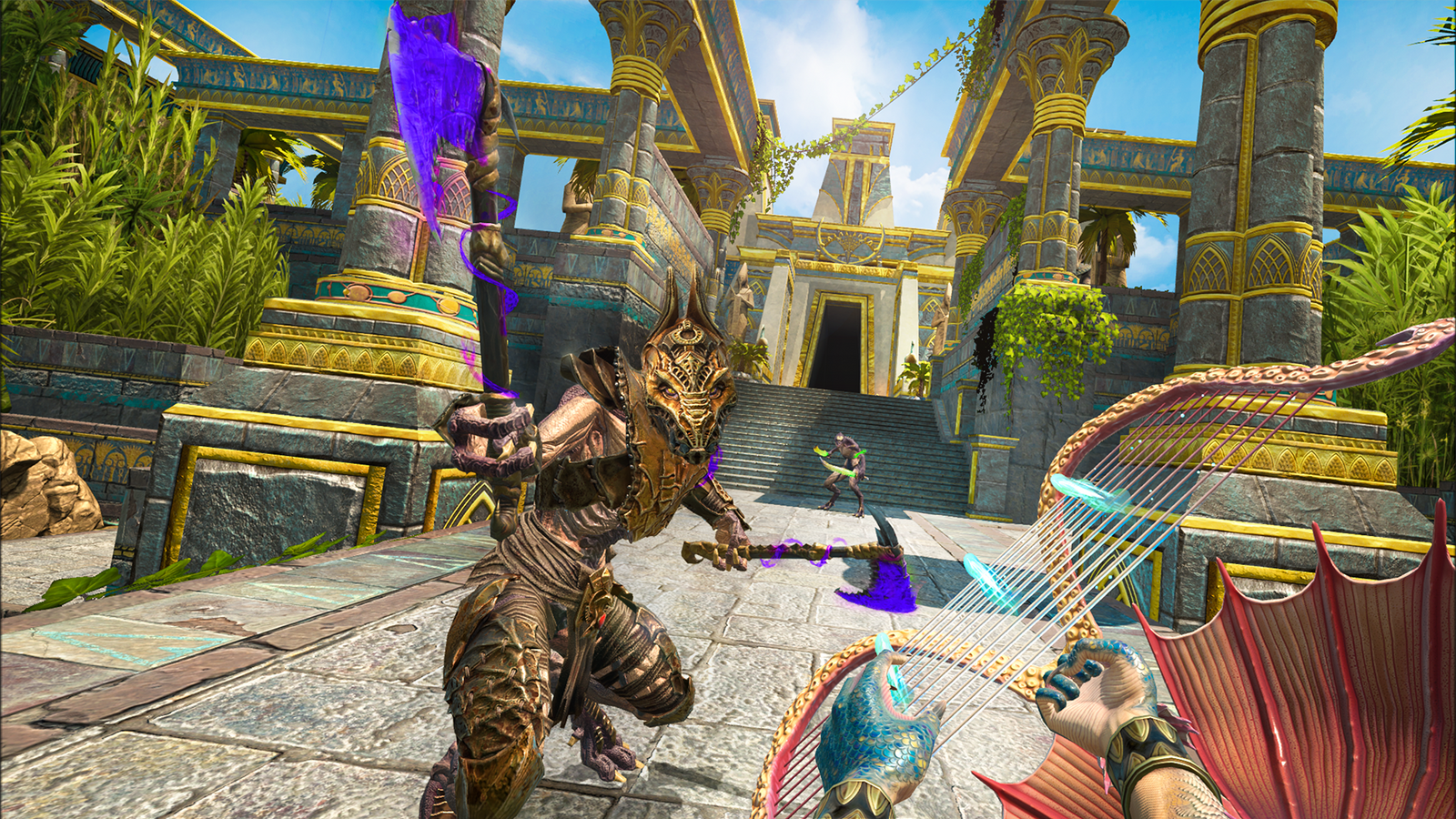
Muspelheim, the land of fire, is one of the new Asgardian locations, but you'll also travel to new realms, such as Ancient Egypt, where you can explore vast worlds like the great sea sands.
One of the ways you'll traverse these expansive new worlds is with mounts. Just like the first game, you'll be able to transform animals into warrior followers, however Asgard's Wrath 2 lets you take that a step further and transform the warriors into mounts, such as the panther mount seen in the walkthrough and the screenshot above.
Each world gives players options for exploration, with lots of varied activities – you'll be able to take part in battles, go on side quests, hunt for rare high-level monsters, play mini games, gather plants and much more.
The god-scale mechanic from the first game also returns in this sequel, allowing you to look down on the world from a god's perspective, maniupalting the environment and solving puzzles from above. You'll also be able to once again possess heroes, with the walkthrough giving us a peek at Abraxas, a "cynical tomb robber with a grudge against the gods."
Updates to Combat
Sanzaru Games says its making some changes to combat in Asgard's Wrath 2 to create an "updated combat system ... centered around player choices." While the first game focused heavily on chains blocking and parry attack, the sequel will let plays "chip away at enemy shields through a flurry of attacks or land skilled parries to trigger opportunity windows that let you cut through your enemy's defenses."
There will also be a full physics system implemented for weapons, which includes swords, axes, bows, staffs and more, and you'll be able to slot relics into weapons and armor to give them buffs. As you level up, new skills and abilities will let you invest into whichever weapons you're enjoying most.
Uncharted Rifts
We also got a look at a new Uncharted Rifts mode, which is an "infinitely replayable dungeon crawling mode with exclusive loot that you take back with you into the main campaign." The mode will be available at any point, during or after the main campaign, and will offer increasingly tough challenges the further through the dungeon you get. If you get far enough, you'll earn a spot on the leaderboards.
"picks up where first game left off in a mysterious tavern you can't escape from."
The weavers of fate will set you on an adventure to find and stop Loki