Pikmin 4 review: standout Switch exclusive is a master of multitasking
Pikmin 4 turns Nintendo's chaotic strategy series into a rewarding adventure about the power of efficient multitasking.
via Mint VR
via Mint VR
Unity just launched a closed beta for visionOS support which developers can apply for.
Unity's support for visionOS was first announced alongside Vision Pro in early June. Acknowledging the existing Unity AR/VR development community, Apple said "we know there is a community of developers who have been building incredible 3D apps for years" and announced a "deep partnership" with Unity.
Porting Unity VR or AR experiences that run in a 'Full Space' on visionOS, meaning ones that don't support multitasking, is relatively straightforward. You use a similar build chain to iOS, where Unity interfaces with Apple's XCode IDE. Rec Room is confirmed as coming to Vision Pro for example, with minimal changes.
But building AR apps in Unity which can run in the visionOS 'Shared Space' alongside other apps is very different, and introduces several important restrictions developers need to be aware of.
Content in the Shared Space is rendered using Apple's RealityKit framework, not Unity's own rendering subsystem. To translate Unity mesh renderers, materials, shaders, and particles to RealityKit, Unity developed a new system it calls PolySpatial.
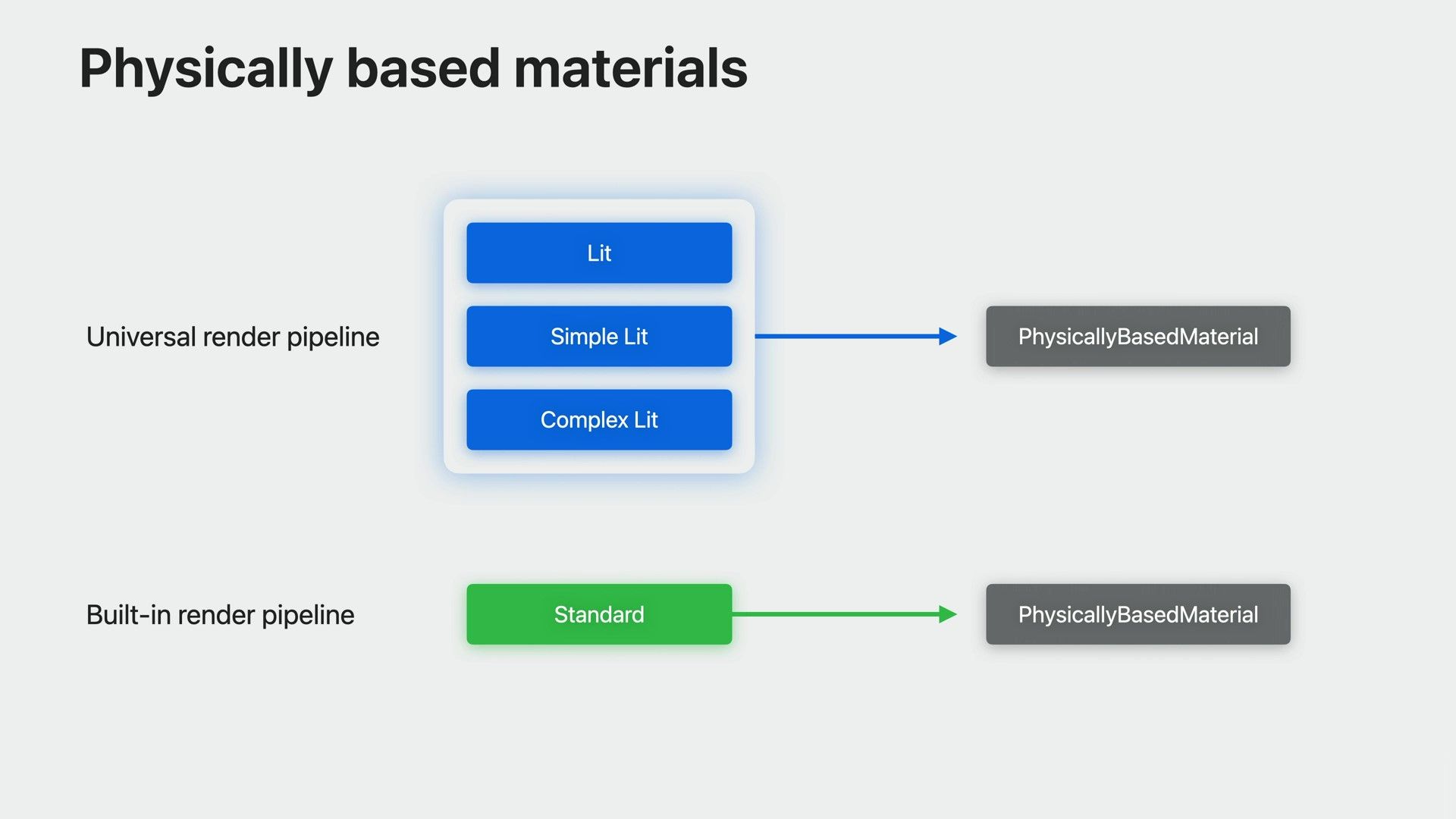
PolySpatial only supports certain materials and shaders though. Of the included materials, for the Universal Render Pipeline (URP) it supports the Lit, Simple Lit, and Complex Lit shaders, while for the Built-in Render Pipeline it only supports the Standard shaders. Custom shaders and material types are supported, but only through the Shader Graph visual tool, not handwritten shaders.
PolySpatial does have a unique advantage though: you can enter play mode directly to the headset, rather than needing to rebuild each time. Unity says this should significantly reduce iteration testing time.
Interested developers can apply to be included in the Unity visionOS support closed beta by filling in this form.
ANNEX brings a new action-RPG roguelike to PC VR next year, and it's just launched a Kickstarter campaign.
Developed by Dominik "Sora" Wenzel, ANNEX sees you play as Koko, a young AI trapped inside a forsaken computer. After awakening for the first time, you set out to explore this strange digital environment and survive encounters with the local residents, the Destroware. It's a fight for survival as you investigate this realm's mysteries and each region is procedurally generated. Here's the full trailer:
Detailed further on the Kickstarter page, ANNEX uses an upgradeable tactical combat system in which you "gain a positional advantage by using cover and take the high ground for increased range. Shoot down enemy projectiles to escape the bullet hell," says Sora.
It also uses a skill-tree system that's described as built around "an entire theme" instead of individual items or abilities. "The Spike-EVO for example might give you the ability to place spiky traps or surround yourself with a reflecting shield, while the Music-EVO could potentially turn your run into a rhythm game experience," states the developer.
Currently at $1,500 funding, Sora seeks $40,000 in funding with stretch goals including additional regions, more playable characters and multiplayer support. Like any Kickstarter campaign, we recommend caution before pledging your money. Kickstarter is not a preorder system, and there’s no guarantee you’ll get what you pledged.
ANNEX currently targets a December 2024 release, arriving on PC VR and flatscreen PCs.